

Synergy Between Schools and Densus 88: Strengthening Teachers as the Frontline Protectors of Youth Against Radicalism


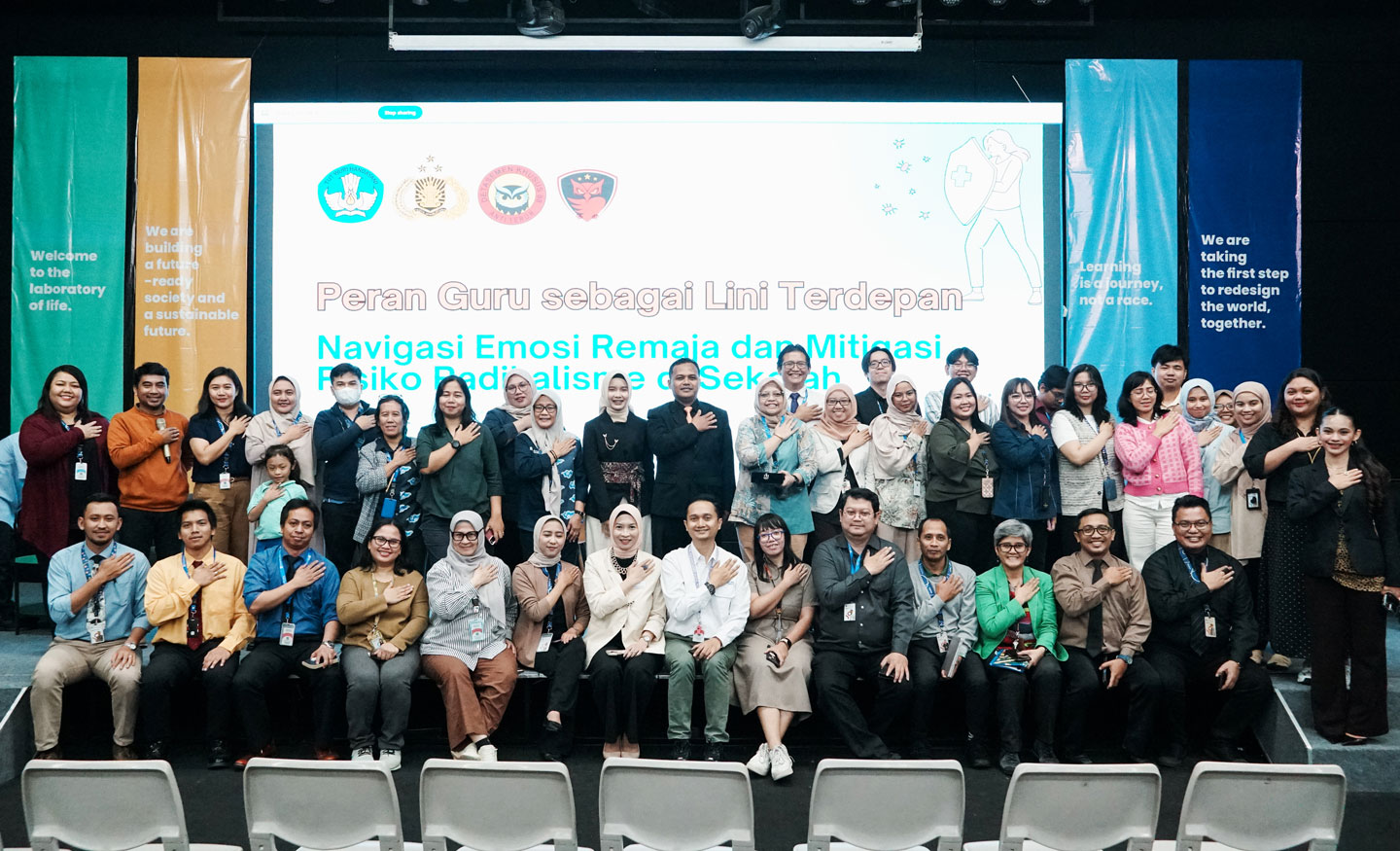
Amidst the rapid flow of digital information targeting the emotional vulnerabilities of teenagers, educational institutions now play a vital role that goes beyond mere academic knowledge transfer. Recognizing this, Sekolah HighScope Indonesia TB. Simatupang, in collaboration with Redea Institute, held a series of strategic collaborations with the Direktorat Pencegahan Densus 88 AT Polri to strengthen the school ecosystem against the threats of radicalism and violence.
The program began with an educational session for parents and students in mid-February 2026, which included school psychologists to discuss navigating teenage emotions in the digital world. Together with the Densus 88 team, the presentation provided a comprehensive overview of the importance of parents as a protective shield for their children against digital influences that are inseparable from student life.
Believing that preparation is incomplete if only given to parents and students, other school pillars also received training. The program culminated in a special session for teachers and staff held on Wednesday, March 11, 2026, at the Black Box Theater, Sekolah HighScope Indonesia TB. Simatupang.
Since its founding in 1996, the HighScope Indonesia Institute—which has evolved into the Redea Institute—has fully upheld home-school collaboration to provide the best for students. Life values such as mutual respect, responsibility, and appreciating differences have been instilled from an early age in all students of Sekolah HighScope Indonesia, which will rename itself to Eco Socio Tech School in July 2026.
Teachers as Students' Mental "Immunity"
The teacher session, titled "The Role of Teachers as the Frontline: Navigating Youth Emotions and Mitigating Radicalism Risks in Schools," emphasized that teachers are the primary adult figures best positioned to perform early detection of changes in student behavior.
During the presentation, the Densus 88 team—featuring Kompol Ridjoko Suseno, S.H., M.H. and Bripda Chaterina Maharani—revealed that radical groups are now actively using social media to approach teenagers through psychological manipulation. They no longer appear with "scary faces" but instead disguise themselves as:
● Confidants (Teman Curhat): Offering solutions for loneliness or perceived injustice.
● False Heroism: Promising a great life purpose or adventure.
● Exclusivity: Making teenagers feel part of a "chosen" group.
"It is important for teachers not to just teach subject outcomes, but also to facilitate students in developing skills and values through learner outcomes. Life skills that allow students to be critical and wise in the digital world," said Antarina S.F. Amir, founder and CEO of Redea Institute. "As the frontliner, teachers must continue to update learning strategies to detect risks and protect students from violence and radicalism".
Mitigation Strategies in the School Environment
Densus 88 reminded attendees that sub-optimal anger management in students can develop into aggressive actions or a desire for revenge. Therefore, teachers were equipped with concrete strategies to build students' mental "immunity":
● Digital Literacy & Narrative Deconstruction: Encouraging students to dissect provocative content and recognize "us vs. them" narratives.
● Safe Space: Creating open discussions where students can ask about sensitive issues without judgment, preventing them from seeking answers from extreme internet algorithms.
● Security Simulations: Providing technical education such as Two-Factor Authentication (2FA) and reporting mechanisms for accounts performing radical grooming.
Shared Responsibility: Government, Schools, and Parents
A crucial point of the meeting was the clarification of roles. While the government provides macro-protection through regulations and security forces, schools and teachers are fully responsible for creating a safe and comfortable environment.
Teachers are expected to integrate values of tolerance and critical thinking into the curriculum, such as in Religion, Civics (PPKn), or Advisory sessions. Additionally, schools are encouraged to form violence prevention teams and provide anonymous reporting channels (whistleblowing systems) for students who notice peers being exposed to dangerous content.
Through this synergy, teachers act as more than just educators; they become strategic partners for parents in building a consistent support system, ensuring teenagers have a safe space to grow both at school and at home.
